Lessons from 40 Entrepreneurs in Delhi
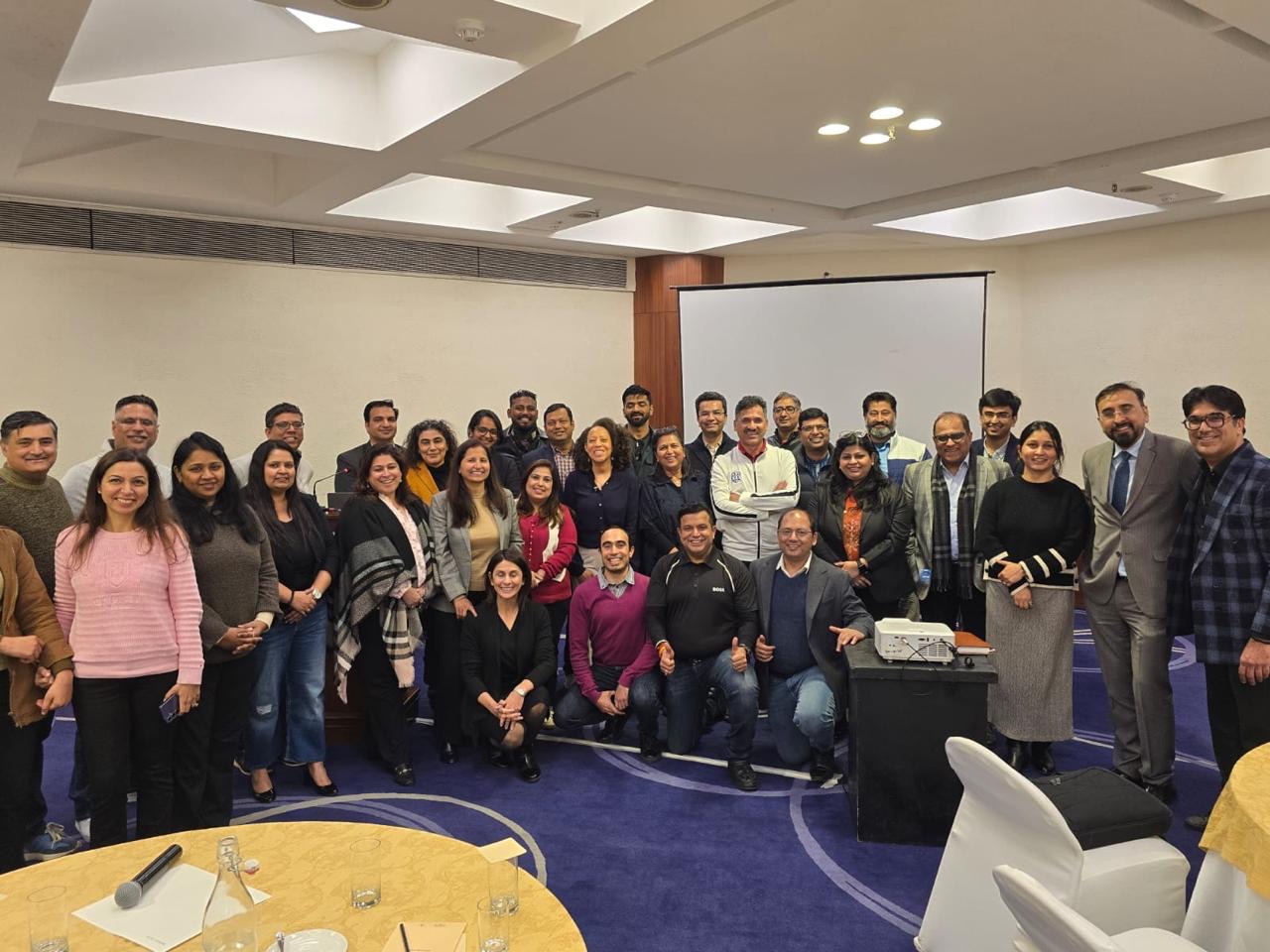
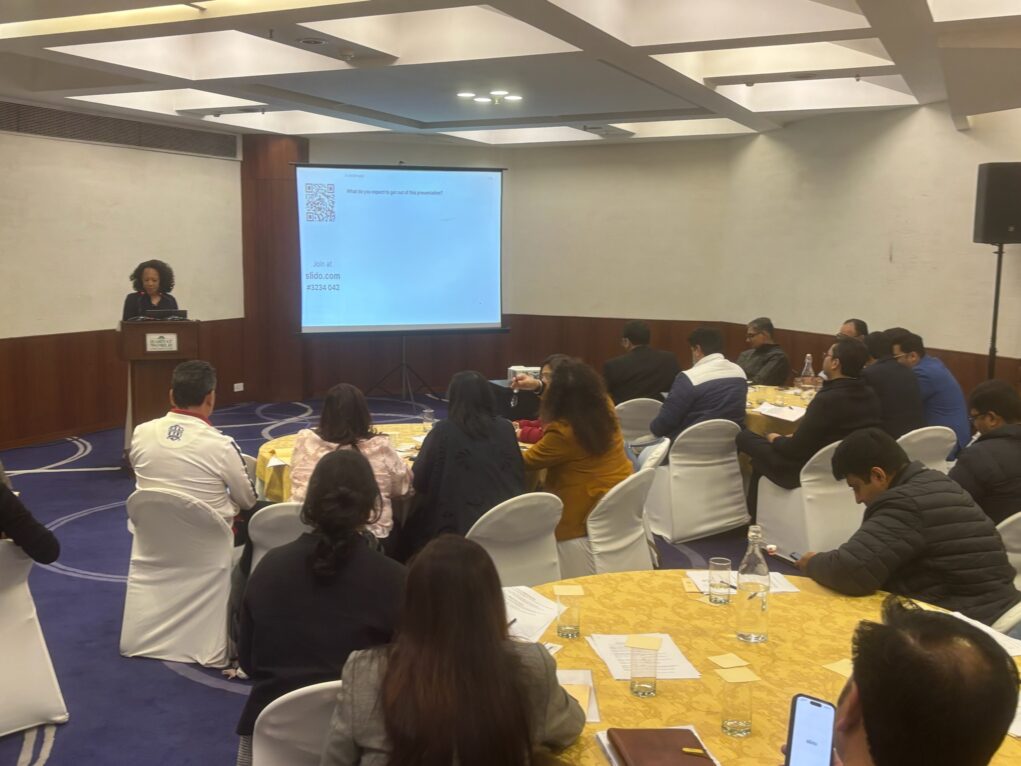
I recently had the privilege of delivering a keynote on anti-fragile leadership to 40 entrepreneurs from the Stanford Seed Transformation Network at the India Habitat Centre in Delhi. These were founders and CEOs running businesses across India – people who have navigated economic volatility, supply chain disruptions, regulatory changes, and rapid technological shifts.
When I posed a simple question “What happens if a key person leaves your business tomorrow?” the room went quiet.
That silence told me everything about why anti-fragility matters. These weren’t inexperienced leaders. They’d built successful businesses through every kind of challenge. But even the most accomplished entrepreneurs can have blind spots about where their organisations are fragile.
The conversations that followed – and continued over drinks that evening – reinforced why I believe every organisation can become anti-fragile, but only through intentional design.
What is Anti-Fragile Leadership?
Anti-fragile leadership is a leadership approach where teams and organisations don’t just survive disruption, they grow stronger because of it. The term “antifragile” was coined by Nassim Nicholas Taleb in his 2012 book Antifragile: Things That Gain from Disorder, describing systems that benefit from volatility rather than merely withstanding it.
Definition: Anti-fragile leadership is the deliberate design of teams, cultures, and systems that use stress, disruption, and uncertainty as raw material for growth, innovation, and competitive advantage.
Most organisations aim for resilience – the ability to bounce back to their original state after a shock. Anti-fragile organisations go further: they emerge from disruption better than before.
Why Anti-Fragility Matters More Than Resilience
Most organisations have spent decades optimising for efficiency. Every bit of slack removed. Every redundancy eliminated. Lean, streamlined, impressive on paper.
And then disruption hits, and there’s nothing left to absorb the shock.
The difference between fragile, resilient, and anti-fragile organisations:
| Type | Response to Stress | Example |
| Fragile | Breaks under pressure | A wine glass shatters when dropped |
| Resilient | Returns to original state | A rubber ball bounces back to its shape |
| Anti-fragile | Grows stronger from stress | Your immune system develops antibodies |
According to McKinsey, organisations that completed successful agile transformations saw operational performance improve by 30–50%, with 65% achieving significant financial impact.

The Three Pillars of Anti-Fragile Teams
Through over 20 years of leadership development work with organisations including NHS Leadership Academy, Lloyds Banking Group, and UK Parliament, I’ve identified three pillars that separate fragile organisations from anti-fragile ones.
1. Learning Agility
Definition: Learning agility is the speed and willingness with which individuals and teams acquire new skills, unlearn outdated practices, and apply new knowledge when circumstances change.
When the ground shifts beneath your feet, how quickly can your team genuinely acquire new skills? Not in theory, in practice.
Learning agility isn’t about sending people on courses. It’s about building a culture where continuous learning is expected, supported, and rewarded.
Key indicator: If your industry transformed completely in the next twelve months, would your team be ahead of the curve or scrambling to catch up?
2. Psychological Safety
Definition: Psychological safety is a shared belief that team members can take interpersonal risks – speaking up, admitting mistakes, asking questions, or challenging ideas – without fear of embarrassment, rejection, or punishment.
Can people in your organisation really be open about failures? I don’t mean the polished “lessons learned” that appear in annual reports. I mean genuine, in-the-moment honesty about what’s not working.
Google’s Project Aristotle research, which studied over 180 teams, found that psychological safety was the single most important factor in team effectiveness. The data revealed that psychological safety was correlated with 43% of the variance in team performance.
Teams with high psychological safety consistently outperformed others:
- 19% higher productivity – completing projects faster with fewer errors
- 31% more innovation – more likely to propose and implement new ideas
- 27% lower turnover – employees less likely to leave
- 3.6x higher engagement – significantly higher morale and job satisfaction
Key indicator: When was the last time someone in your organisation openly shared a failure, and was thanked for it?
3. Adaptability
Definition: Organisational adaptability is the capacity to respond to change as a natural part of operations – where people are empowered to make decisions, bureaucracy doesn’t slow response times, and “that’s not how we do things” isn’t an acceptable answer.
The most adaptable organisations share a common trait: they’ve distributed decision-making power throughout the organisation. They’ve built teams that can respond without waiting for permission from the top.
McKinsey research on enterprise agility found that agile transformations delivered:
- 30 – 50% improvement in operational performance metrics
- 20 – 30-point increases in employee engagement scores
- 20 – 30% cost savings reinvested into new opportunities
Key indicator: If a major disruption happened tomorrow, would your organisation be making decisions in hours, days, or weeks?
The Bamboo Principle: Anti-Fragility in Nature
I travel extensively for my work, and I’ve noticed bamboo everywhere I go. Bamboo offers a powerful metaphor for anti-fragile leadership.
Bamboo is hollow – but incredibly strong. It bends in storms that would snap an oak tree. It grows faster than almost any plant on earth – sometimes a metre a day.
And here’s what fascinates me most: the more wind bamboo faces, the stronger its root system becomes.
Bamboo doesn’t just survive storms. It uses them to grow deeper roots. That’s anti-fragility in nature. The question for leaders is: can we design our organisations to work the same way?
Anti-Fragility in Action: Insights from Stanford Seed Entrepreneurs
The Stanford Seed Transformation Network works with entrepreneurs across Africa, South Asia, and other emerging markets who are scaling businesses in some of the world’s most volatile environments. These founders don’t have the luxury of stability – they’ve had to build anti-fragility into their operations from day one.
During my sessions with Stanford Seed entrepreneurs in India, several themes emerged:
On Learning Agility: The most successful founders described cultures where everyone is expected to learn continuously – not through formal training programmes, but through daily experimentation. One entrepreneur shared how their team conducts weekly “learning sprints” where they test new approaches and share results openly, regardless of whether they succeeded or failed.
On Psychological Safety: Multiple founders spoke about the challenge of creating environments where employees feel safe to challenge leadership decisions. In hierarchical business cultures, this requires deliberate, sustained effort. The breakthrough often comes when senior leaders publicly acknowledge their own mistakes first.
On Adaptability: Several businesses had pivoted dramatically during recent disruptions. What distinguished those who thrived from those who struggled was the speed of decision-making. Anti-fragile organisations made decisions in days; fragile ones took months.
Anti-Fragile Leadership and AI Disruption
AI represents the next great test of organisational anti-fragility. How organisations respond reveals whether they are fragile, resilient, or anti-fragile:
| Response Type | Behaviour | Outcome |
| Fragile | See AI as threat, respond defensively | Fall behind competitors |
| Resilient | Manage AI carefully, run cautious pilots | Maintain position |
| Anti-fragile | Experiment rapidly, fail fast, build new capabilities | Gain competitive advantage |
Anti-fragile organisations don’t fear AI disruption – they use it as an accelerant for learning and transformation.
Building Anti-Fragility: A Practical Framework
Anti-fragility can be built. It’s not a fixed trait – it’s a design choice.
Self-Assessment Questions
On Learning Agility:
- What new skills has your team developed in the last six months?
- How is knowledge shared when someone leaves?
- Are people rewarded for learning, or just for delivering?
On Psychological Safety:
- What happens when someone admits a mistake?
- Do people share bad news quickly, or hide it?
- When was the last time a junior team member challenged a senior decision?
On Adaptability:
- How quickly can your organisation make decisions in a crisis?
- Who has permission to change things without approval from the top?
- What would need to change for your organisation to respond faster?
The Key Person Test
Here’s a simple anti-fragility test I use with leadership teams:
What happens if a key person leaves your business tomorrow?
Not in three months with a nice handover. Tomorrow. Does everything they know walk out the door with them? Or have you built systems, shared knowledge, and developed others so the business adapts and continues?
If the answer makes you uncomfortable, that’s where to start.
The Tri-Level™ Approach to Building Anti-Fragile Teams
At Jenny Garrett Global, we use our signature Tri-Level™ methodology to build anti-fragility across organisations. This approach works simultaneously with:
- Diverse talent – building individual anti-fragile capabilities
- Line managers – creating psychologically safe team environments
- Senior sponsors – embedding anti-fragility into organisational culture and systems
This multi-level approach ensures that anti-fragility isn’t dependent on any single leader or initiative – it becomes embedded in how the organisation operates.
Frequently Asked Questions
What is the difference between resilience and anti-fragility?
Resilience is the ability to recover from setbacks and return to your original state. Anti-fragility goes further – it’s the ability to grow stronger because of setbacks. A resilient team bounces back after a crisis; an anti-fragile team emerges from the crisis with new capabilities, stronger relationships, and better systems than before.
How do you build psychological safety in a team?
Building psychological safety requires leaders to model vulnerability by admitting their own mistakes, create space for all voices to be heard, respond constructively when people share problems or failures, and actively reward learning over blame. Google’s research found that high-performing teams had equality in conversational turn-taking – all members had opportunity to speak.
Can anti-fragility be measured?
Yes. Key indicators include: speed of skill acquisition when circumstances change (learning agility), willingness to share failures openly (psychological safety), and time from disruption to decision (adaptability). Organisations can also track promotion rates from development programmes, employee engagement during change, and innovation output during uncertain periods.
What is the Stanford Seed Transformation Network?
The Stanford Seed Transformation Network is a Stanford University initiative that works with entrepreneurs scaling businesses in emerging markets across Africa and South Asia. Jenny Garrett OBE partnered to the network, delivering leadership development session to help founders build anti-fragile organisations that can thrive through the unique challenges of high-growth markets.
About Jenny Garrett OBE
Jenny Garrett OBE is CEO and Founder of Jenny Garrett Global, a leadership development consultancy specialising in Inclusive Leadership, Entrepreneurial Leadership, and AI-Ready Leadership. With over 20 years’ experience, Jenny works with organisations including NHS Leadership Academy, National Gas, Lloyds Banking Group, and UK Parliament to develop leaders who can thrive through disruption.
Jenny is partnered with the Stanford Seed Transformation Network, delivering leadership development to entrepreneurs scaling businesses across emerging markets. In January 2026, she delivered her anti-fragile leadership programme to entrepreneurs across India, including sessions in Delhi, Hyderabad, and Mumbai.
Jenny received her OBE from Queen Elizabeth II in 2021 for services to Entrepreneurship and Women in Business. She is co-host of the AI for Equity podcast and author of Equality vs Equity.
To discuss bringing anti-fragile leadership development to your organisation, contact Jenny Garrett Global at jennygarrettglobal.com
References
- Nassim Taleb’s Antifragile: https://www.penguinrandomhouse.com/books/176227/antifragile-by-nassim-nicholas-taleb/
- Google Project Aristotle (re:Work): https://rework.withgoogle.com/guides/understanding-team-effectiveness
- Amy Edmondson’s The Fearless Organization: https://fearlessorganization.com/
- McKinsey Enterprise Agility: https://www.mckinsey.com/capabilities/people-and-organizational-performance/our-insights/enterprise-agility-buzz-or-business-impact
- Amy Edmondson’s TED Talk on psychological safety: https://www.ted.com/talks/amy_edmondson_how_to_turn_a_group_of_strangers_into_a_team