
I grew up in a home where we were all given the same opportunities regardless of gender. My father was a radical who fought for justice and lived on his own terms rather than those of the very patriarchal society he happened to have been born into. Understandably, it never occurred to me that there was a ceiling above which I couldn’t climb as a female leader, until I entered my thirties and began to navigate my way through leadership positions. Juggling a busy career and a young family would have been the perfect excuse to keep my head down and hope for the best, but that would have made light of the lessons I had learned from my father’s fight against injustice. For my own sake, as well as in an attempt to honour his legacy, I refused to accept the status quo and chose instead to fight to change the narrative that women in senior leadership are anything but positive.
The Oxford dictionary has several definitions for the word ‘empower’. Firstly, it means to ‘give (someone) the authority or power to do something’. I am not overly enamoured by this definition because it seems to imply that permission is required in order for power to change hands. The second definition is slightly more appealing – ‘to make (someone) stronger and more confident, especially in controlling their life and claiming their rights’. Either way, the concept that women need to be empowered suggests that someone else has the power and needs to be willing to share it.
We have just celebrated another International Women’s Day, and the theme this year was Inspire Inclusion. That there is still the need to continue to commemorate this day and highlight persistent gender inequalities is testament to the sad fact that there are still large communities and organisations where gender equality appears to be but a pipe dream. Majority of research has shown that leadership is less to do with gender and more to do with inherent traits individuals are born with coupled with the environment in which they are brought up. What this means is that women are every bit as good at leadership as men are, albeit leading in ways that are very different from men.
In this article on Gender and the effectiveness of leaders: a meta-analysis the authors write that “aggregated over the organizational and laboratory experimental studies in the sample, male and female leaders were equally effective. However, consistent with the assumption that the congruence of leadership roles with leaders’ gender enhances effectiveness, men were more effective than women in roles that were defined in more masculine terms, and women were more effective than men in roles that were defined in less masculine terms.”
In another article on the Gender Effect on Leadership by Diane Cassidy, she writes that , “many believe that the resistance to women as leaders is fundamentally based in these gender-biased perceptions resulting in the disbelief of a woman’s ability to lead if she does not measure up to the expectations and behaviours of her male counterparts. This resistance not only prevents women from entering leadership roles but sometimes affects the way women behave when they do take on leadership roles. Gender differences force women to accept and demonstrate behaviours typically attributed to men whether it is their inherent style or not and whether it is in the best interests of the organization or not.”
Both these articles have similar conclusions, namely that women face an uphill task in not only proving they are able to lead but that they can do so in a way that is often very different from what is perceived as the ‘normal’ way. In order for women to begin to share power at the table, this expectation that they must lead in the same way as men do, must be challenged. The very nature of power often means that when one has it, there is the tendency to not want to give it up or to even share it. This is why Mahatma Gandhi said that: “the day the power of love overrules the love of power, the world will know peace.” In order for women to be empowered in leadership roles the men who currently, occupy most of the tables and corridors of power, need to be willing to share this power. Not just in word but in deed.
According to theEuropean institute for gender equality, “Women’s empowerment has five components: women’s sense of self-worth; their right to have and to determine choices; their right to have access to opportunities and resources; their right to have power to control their own lives, both within and outside the home; and their ability to influence the direction of social change to create a more just social and economic order, nationally and internationally”.
Sadly, this is still not the experience of a lot of women across the world although arguably, some countries and organisations are farther ahead than others. And while the onus is on us as women to continue to push for change in any and every way we can, there is also the expectation that men (like my father) who have a better understanding of the advantages of having both men and women leading together, will join the campaign to ‘empower’ more women at every level of leadership. When you have heard the narrative that you do not have the skills to lead well long enough, it often takes someone else to recognise and call out your abilities, in order for you to find the courage to step into the path you were made for. Whether it is that women are too emotional, not tough enough, or take too much time away for family, there are a myriad of wrong beliefs out there that serve as barriers that continue to keep women from the leadership positions they are undoubtably capable of.
Coaching has been very instrumental in helping me develop as a leader and equally, I have coached many women who have had to break the barriers in their own minds first of all, before attempting to break the tangible barriers in the work place in order to take their rightful place at the table. It is truly heartening to watch this transformation happen. And so I believe that the first stage of women’s empowerment is a woman’s recognition of her self-worth just like the European Institute maintains. This has to be the foundation upon which everything else stands, and will enable sufficiently confident women to take power, rather than wait for it to be given, recognising that power will not always be handed out on a silver platter. This is why the concept is one of breaking barriers, implying forceful action.
In addition to increasing our self-worth and confidence, women must have access to education, training, and other resources that help develop us as leaders. We must also continue to work to transform and challenge institutions where gender equality is not the norm, and to pull down structures that act as barriers to women stepping into leadership roles they are qualified for. Furthermore, we must whole-heartedly support and champion each other rather than pull each other down as we climb the career ladder, recognising that unity is far more advantageous than competition or jealousy.
I would like to end with this quote by Beth Revis (Across the Universe), because she captures the essence of what power should really be:
“Power isn’t control at all — power is strength, and giving that strength to others. A leader isn’t someone who forces others to make him stronger; a leader is someone willing to give his strength to others that they may have the strength to stand on their own.”
Dr Oge Austin-Chukwu
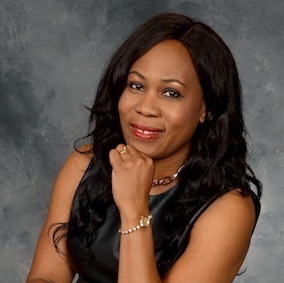
With over 25 years’ experience in Medicine working with people from a variety of backgrounds and settings and coupled with my skills as a Transformational Coach, I know how to bring out the best in individuals and teams as they navigate often complex work environments. I have had the privilege of working with leaders and managers at different levels in the business, charity and educational sectors and have facilitated many workshops on a variety of topics affecting work and performance.
We don’t recycle old ideas.
We shape what’s next.
Empowering women in leadership isn’t about fixing the women – it’s about redesigning the systems they lead in.
Read where we are now: Women’s Leadership Programmes UK: Why Most Fail and What Makes the Difference