
As a certified minority owned business, we recently attended an MSDUK supplier diversity event that brought together procurement leaders from some of London’s most significant public sector organisations. Representatives from Westminster Council, City of London Corporation, Islington Council, Transport for London, the Greater London Authority, and Peabody gathered to discuss the new Procurement Act 2023 and what it means for SMEs and diverse suppliers.
One theme dominated the conversation: social value. How it’s tracked. How it’s weighted in tenders. How procurement teams are now required to report on it, measure it, and hold suppliers accountable for delivering it.
This is progress. But as we listened, a question kept surfacing: are we measuring the right things?
The Social Value Box-Ticking Trap
Social value has become a public sector procurement requirement, which is a positive step. The Procurement Act 2023 mandates greater transparency, published pipelines for contracts over £2 million, and increased market engagement. Westminster Council, City of London and others are now required to demonstrate how they’re spending taxpayers’ money responsibly and diversifying their supply chains.
But requirements can quickly become checkboxes. Suppliers scramble to articulate their social value in bid documents, sometimes retrofitting activities to fit evaluation criteria rather than embedding social purpose into how they actually operate.
We’ve all seen it: a hastily assembled schools engagement programme that exists primarily to tick a tender box. A mentoring commitment that sounds impressive on paper but never quite materialises during contract delivery. Social value as performance, not practice.
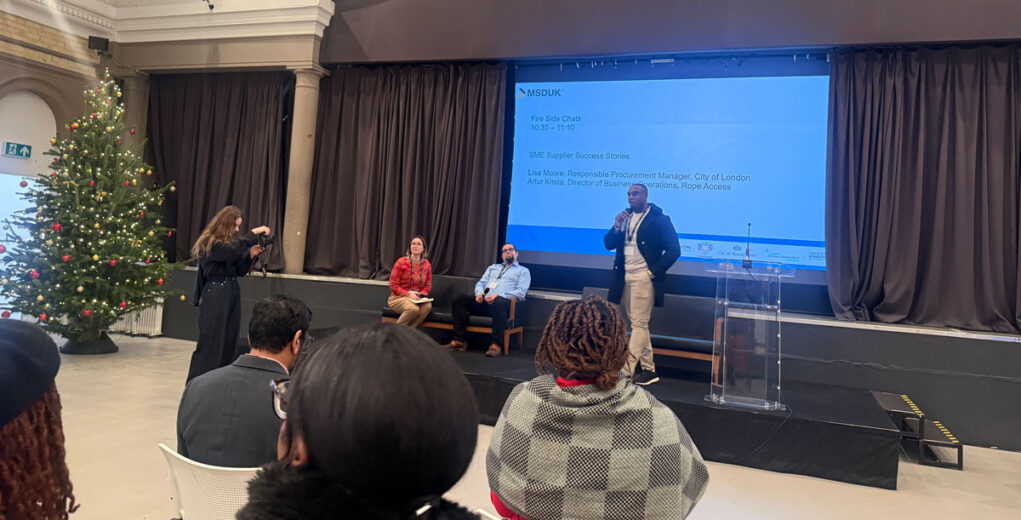
The procurement professionals on the panel were refreshingly honest about this challenge. Lisa Moore from City of London Corporation spoke about streamlining tender documentation so SMEs aren’t wading through 50-page documents. Glenda Corkindale from Islington Council’s Progressive Procurement Unit described how they’re challenging colleagues to structure requirements differently to help smaller suppliers bid. Natalie Evans from Westminster Council highlighted the new requirement to track whether tier-one suppliers are actually paying their subcontractors within 30 days, not just taking their word for it.
Several mentioned the gap between what suppliers promise in bids and what actually gets delivered. The question of how to evaluate whether social value commitments are genuine or performative hung in the air.
The Difference Between Bolt-On and Built-In Social Value
Here’s what we’ve learned from twenty years of running a leadership development consultancy that works with public sector organisations including NHS trusts, local authorities and government departments: social value isn’t something you add to your business. It’s something your business either is or isn’t.
Bolt-on social value looks like a CSR initiative running parallel to your core work. Built-in social value means your business model itself creates positive change.
Let me be concrete about what this looks like in practice.
We created the UK’s first Diverse Executive Coach Directory, making visible the talent that had always existed but was being overlooked. That directory now serves the entire sector, not just our clients.
When we saw young people struggling with confidence, resilience and career readiness, we co-founded Rocking Ur Teens, a social enterprise that has now supported over 3,000 young people. This wasn’t a bolt-on to make our bids look good. It emerged from the same conviction that drives our commercial work: that everyone deserves access to development opportunities that help them thrive.
Our associate model deliberately employs facilitators from diverse backgrounds because our methodology – Tri-Level™ – recognises that sustainable change happens at individual, team and organisational levels simultaneously. You can’t credibly deliver inclusive leadership programmes with a homogeneous delivery team. The diversity isn’t decoration; it’s fundamental to the work.
Four Questions for Procurement Professionals Evaluating Social Value
So how do you spot the difference between performative and embedded social value when you’re evaluating supplier bids?
Ask about longevity. Has this supplier been doing this work for years, or did they discover social value when it became a procurement requirement? Genuine commitment has history.
Ask about integration. Is the social value activity connected to their core business, or does it sit awkwardly alongside it? Built-in social value makes strategic sense; bolt-on social value often doesn’t.
Ask about specificity. Vague commitments to “support local communities” are a red flag. Suppliers with genuine social purpose can tell you exactly what they do, who benefits, and what impact they’ve measured.
Ask about sacrifice. What has the supplier given up or invested to create social value? If the answer is “nothing,” that tells you something important.
Beyond the Tender: What the Procurement Act 2023 Really Means for Social Value
The Procurement Act 2023 is pushing the public sector toward greater transparency and accountability. The requirement to publish contract pipelines, conduct pre-market engagement, and report on payment practices is welcome progress.
But the real opportunity isn’t just better measurement of social value. It’s recognising that some suppliers have been building social value into their DNA long before it became a tender requirement.
Those are the suppliers who won’t just tick your boxes. They’ll help you understand what meaningful impact actually looks like.
See Case Studies of our impactful public sector work.
Read: Beyond the Boardroom: Why Jenny Garrett Global Invests in the Next Generation of Global Leaders