“70 percent of interna7onal ventures con7nue to fail because of cultural differences.
Simplis7c approaches that teach cultural prac7ces and taboos aren’t sufficient”
David Livermore
What are we missing?
As I listened to the panel discussion on cultural intelligence amongst my fellow coaches at the Diverse Coaching Directory recently, it struck me that within organisations, we were still missing something. We have been creating awareness and respect for cultural differences, but what does it really mean for the organisation?
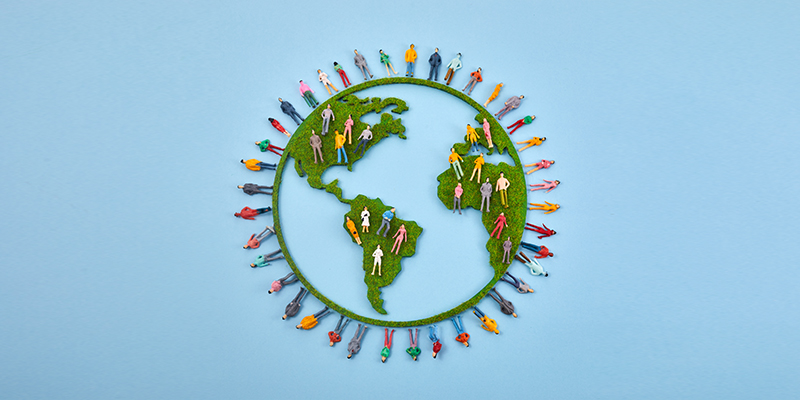
Besides looks, we have started to recognise that those from different national cultures have different mannerisms, languages, expectations and perhaps different sense of ethics. With the organisation becoming a global melting pot, will this awareness and respect for each other be enough? Is it enough to also just have ‘different people’ or is there any other intelligence that needs to be grown…
I wondered how we could make the whole to be greater than the sum of its parts.
During my 20+ years of working globally across different cultures, my different role hats of a Leader, an Executive Coach and an Agile practitioner taught me different perspectives. As a Leader working with teams across cultures, I noticed that each culture brought something unique that could be tapped. As I worked as an Executive and Leadership Coach with the privilege of going on 1-to-1 journeys with my clients, I saw the common humanity amongst us. As an Agile practitioner working towards organisational transformation, I was curious as to why the ‘agile journey’ when done right had the ability to shift collective culture the way it did.
During these experiences, while I saw the unique strengths cultural differences brought, I also saw the challenges they posed when people were brought together. How could we solve this?
It felt like I was placing ‘dots’ on the page through my experiences and insights but I was yet to draw ‘lines’ or ‘shapes’ with them!
The world around us
As I dug deeper into this, I saw the fantastic work that had been put into this research around the world. It was found that people were not just randomly different from one another. It also wasn’t that one culture was better or worse than the other.
Hofstede described the differences between countries under 6 categories. Trompenaars and Hampden-Turner saw this to be of 7 dimensions. David Livermore divided the world into 10 cultural clusters. Through their work, I found some great pointers.
As someone who grew up in Asia and having worked in other parts of the world, I could understand the impact of power-distance, where ‘high power-distance’ meant that great deference was given to a person in authority without a need for justification vs ‘low power-distance’ where the culture valued everyone being treated equally.
As a coach working with leaders globally, I could see how someone’s perception of good could completely be turned on its head when working with someone else from another culture, for example where one might think it was good to self-sacrifice and be helpful to others (collectivist), the other might believe that ‘good’ meant to be self-reliant and independent (individualist) and to fulfil your personal responsibility.
I am certain there is a story behind every single cultural characteristic. Such research has made it possible to understand each country’s people (sometimes even your own!) with some great tools now available to know how best to work with a certain country’s culture.
How does this relate?
This in itself may not be enough though. Hofstede explains that ‘National Culture’ is a group phenomenon, that can only be ‘measured in comparison’ and at scale. As we look at the country as a wider whole, these characteristics become more visible. However, at an individual or small group level, individual personalities may dominate more and may not be as obvious.
How then within an organisation, could we create this cultural intelligence and how could the business thrive through these differences?
The organisational context
Since the 1980s the word ‘culture’ has come to mean ‘this is the way we do things around here’. While adding ping-pong tables and providing free lunches might create a sense of commonality, this may not really explain ‘why’ they were added.
Edgar Schein saw this as three levels: 1. Artefacts (visible behaviour), 2. Values (widely communicated) and 3. Beliefs (our tacit assumptions of which others can be unaware). As an organisational change agent, I have admired the great lengths some organisations go to in order to create global similarity at level 1 of this framework. I like it even more when leaders take the time to think, articulate and communicate organisational values at level 2. However, where often businesses struggle in the global context and marketplace, is at level 3 (unspoken beliefs and assumptions).
It was interesting to read that at one time, dining at McDonald’s was a ‘show of status in Moscow, whereas it is a fast meal for a fast buck in New York’ [Trompenaars and Hampden-Turner, Riding the waves of culture]. It brought back the point, that it was not what was visible on the surface, but the ‘shared meaning’ a group of people gave to it that was key.
Is this where cultural intelligence becomes relevant? What is cultural intelligence…
Source: P. Christopher Earley and Elaine Mosakowski Edgar Schein’s level 3 of ‘beliefs’ that are invisible and assumed could greatly benefit from becoming aware of the culture map and national culture differences that you saw earlier. But if that understanding and awareness remained in your ‘head’ as knowledge, it might not take you anywhere further. To sense it with your ‘heart’ and show it in action
with your ‘body’ is how you may get the full benefit of true cultural intelligence in the global workplace. David Livermore describes this to be in 4 stages: Drive – Knowledge – Strategy – Action.
While it is indeed valuable to train ‘individuals’ in these techniques (or groups of individuals) is there any other way to create a deeper ’collective shift’ in the organisation where this movement towards cultural intelligence can happen faster?
My Eureka moment came as I connected this to my experiences as an Agile practitioner and an Agile Coach. I had originally wondered why it was that I saw ‘culture’ shifts happening during Agile transformations in the organisation.
According to Hofstede insights in the Culture Factor, “…Organisational Culture is ‘what we do’ in an organisation, and is manifested through the Symbols, Rituals, Beliefs, Attitudes, Behaviours of the people collectively in an organisation. National Culture determines how we emotionally relate to ‘what we do’ in an organisation”.
Their further comment that “Organisational Culture is based on ‘practices’ and is something that can vary greatly from organisation to organisation, regardless of the country or industry” spoke directly to my own experience as an Agile practitioner and Executive Leadership Coach within organisations.
Picking the right ‘lever’ for culture change
This becomes prominent when we see anti-patterns and challenges within an organisation where the root cause points towards its culture. Understanding the difference between national culture and organisational culture and how to leverage organisational culture is at the heart of this key for change.
If you are new to culture change or curious about how agility can co-exist with executive and leadership coaching to create culture change, as well as train your workforce for growing cultural intelligence for the global marketplace, get in touch!
Geetha Ramachandran PPC

Geetha Ramachandran is the Founder and Director of Powerfully Human Coaching & Consultancy Ltd. and has worked for 20+ years across different industries and cultures. She is an award-winning Executive Coach, Leadership Coach and Agile practitioner, PCC accredited by the International Coaching Federation (ICF). She received the ‘Telegraph Woman of the Year’ award in 2018 for creating a one-team culture and ‘Acumen Made a Difference’ award in 2014 for customer impact and team satisfaction.