
This is why we do the work we do.
After completing year one of the Excel positive action programme at Guy’s and St Thomas’ NHS Foundation Trust, I’m reflecting on what makes this partnership so powerful. It’s not just the measurable outcomes – though 100% of participants would recommend the programme. It’s the emotions in the room during sessions. The personal and professional growth we witnessed. The life-changing results that ripple out far beyond the participants themselves.
Because here’s what most organisations miss about effective positive action programmes: when you commit to real, systemic change, you don’t just develop 18 talented professionals from global majority backgrounds. You transform 54 lives – participants, their line managers, and their senior sponsors – simultaneously.
The problem with tick-box diversity programmes
I see it constantly across the NHS and healthcare sector: organisations trying to improve diversity and inclusion through one-off interventions. An unconscious bias workshop. A lunchtime session on allyship. A webinar during Black History Month.
These might make people feel better temporarily, but they rarely move the dial on representation at senior levels. They don’t address the systemic barriers that mean talented professionals from global majority backgrounds hit invisible ceilings. And they certainly don’t create the sustained culture change that organisations genuinely committed to equity need.
Guy’s and St Thomas’ took a different approach.
When they approached us to design their Excel positive action programme, they recognised that empowering professionals from global majority backgrounds whilst addressing underrepresentation at senior levels required something more substantial. Something transformative. A long-term, systemic intervention using proven methodology.
They committed to an eight-month programme using our Tri-Level™ approach. And the results? They speak for themselves.
What makes positive action programmes actually work: The Tri-Level™ methodology
Over nearly 20 years and more than 50 cohorts, we’ve learned that developing diverse talent in isolation doesn’t create lasting change. The magic happens when you develop talent, their managers, and senior sponsors simultaneously.
That’s our Tri-Level™ approach to leadership development, and it’s exactly what we brought to Guy’s and St Thomas’:
Level 1: The Talent (18 participants) Talented professionals from global majority backgrounds, selected through a rigorous application process, participated in an intensive eight-month development programme covering:
- Authenticity, Identity & Purpose
- Project Management, Change and Decision Making
- Emotional Intelligence and Leading Inclusively
- Communication, Language and Presence
- Personal Brand & Leveraging Networks
- Consolidation and Career Planning
Level 2: Line Managers (18 managers) We equipped participants’ line managers to unlock potential and become effective allies through dedicated briefing sessions, toolkits, and ongoing support.
Level 3: Senior Sponsors (18 sponsors) Senior leaders received training in active sponsorship and advocacy – not just mentoring but opening doors and using their influence to create opportunities.
That’s 54 people engaging in transformative leadership development together – creating systemic change, not just individual progress.
This Tri-Level approach is the same methodology we’ve used successfully in our #IWillAccelerate programme and across multiple NHS trusts and healthcare organisations. Learn more about our inclusive leadership approach here.

What actually happened: The impact of sustained positive action
When we conducted end-of-programme evaluations and focus groups, the quantitative results were strong:
- 100% would recommend the programme to colleagues
- 95% felt they could be their authentic selves at work after the programme (compared to 21% at the start)
- 100% felt confident talking to their line manager about race and ethnicity (compared to 57% at the start)
- 89% felt confident discussing career aspirations with managers
- Promotions during and after the programme, with participants taking on more senior roles
But the qualitative impact runs deeper. And that’s what really matters when you’re measuring the effectiveness of diversity programmes.
“Transformative”: Empowerment and unexpected growth
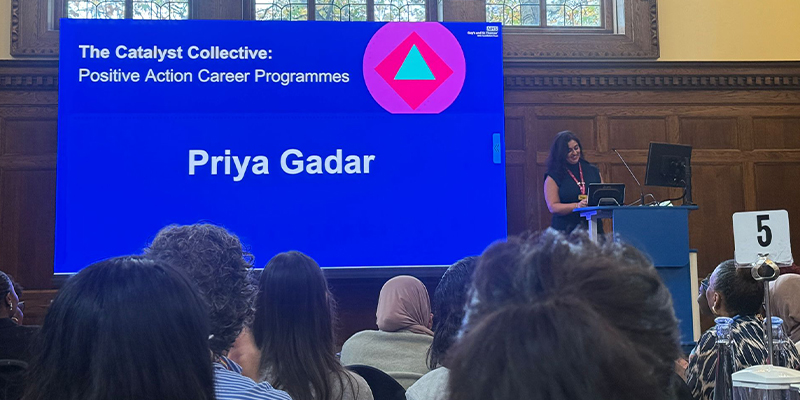
Participants consistently used the word “transformative” to describe their experience. Priya Gadar, Service Manager in the Patient Access Team, reflected:
“Despite everything I’d achieved – getting a master’s degree, a Prince2 qualification and taking on increasingly senior roles – I began to feel a bit stuck. I knew I had more to give, but I wasn’t sure what was next for me.”
The 360-degree feedback process became a catalyst for growth. The Action Learning Sets taught participants to challenge themselves and each other constructively. The programme created space for introspection and stepping outside comfort zones.
As participants told us:
“The empowerment and confidence that this programme gave to participants cannot be measured.”
“I have led on projects, something that I thought I’d never be able to do.”
“I thought leadership was out of my reach. I am now focused and empowered to embrace my potential and the possibilities.”
Breaking down silos: Cross-departmental collaboration
One of the unexpected benefits of this positive action programme was the peer learning across clinical and non-clinical departments. In large NHS trusts, silos form easily. But Excel brought together professionals from across GSTT, and the cross-pollination of perspectives enriched every discussion.
These relationships extended well beyond the formal programme. Some Action Learning Sets continued meeting independently, creating ongoing professional support networks that break down organisational barriers.
Making sense of shared experiences
Perhaps the most powerful aspect of bringing together global majority colleagues for leadership development is the sense-making that happens. Priya captured this beautifully:
“What really struck me was sitting in a room full of colleagues from global majority backgrounds. We shared experiences and suddenly, things I’d considered ‘normal’ about how I’d behaved or felt in the workplace began to make more sense through a different lens. It was powerful.”
This isn’t just about networking. It’s about understanding that your experiences aren’t isolated. That systemic barriers are real. That you’re not alone.
As Priya noted: “I was raised to be respectful and not to interrupt – which meant I’d hesitate to speak up in meetings. I also felt the need to give 150% just to be seen.”
When participants realise these patterns aren’t personal failings but responses to structural inequities, everything shifts.
The sponsor transformation: Systemic change in action
Here’s what makes the Tri-Level approach to inclusive leadership development so powerful: sponsors and managers transform too.
One sponsor reflected: “It has enabled me to see things from a different perspective. I’ve learnt about how important culture and diversity is. I hadn’t thought previously about the impact that coming from a different cultural background might have on your working life.”
This is systemic change. When senior leaders develop new awareness and accountability, when managers learn to unlock potential differently, when participants build confidence and networks – that’s when organisations actually shift.
What we’re taking into year two of the programme
The beauty of sustained commitment to positive action is the opportunity to learn and evolve. Our end-of-programme focus groups surfaced valuable insights we’re incorporating into year two:
Strengthening sponsor and manager engagement – Clear sponsor contracts, mid-programme check-ins, and comprehensive manager toolkits to maintain engagement throughout.
Optimising the learning experience – More face-to-face sessions based on participant feedback about the power of in-person connection, whilst making virtual sessions more interactive.
Enhanced presentation experience – Rehearsal sessions and a showcase atmosphere to balance assessment with celebration.
Sustained momentum – Continued Action Learning Sets, networking events, and ongoing development opportunities post-programme.
Why this matters: What healthcare diversity programmes that work actually look like
If you genuinely want to move the dial on representation in NHS leadership, if you actually want to create equitable workplaces where talent from global majority backgrounds can thrive and progress into senior positions, it takes sustained, systemic commitment.
Not a workshop. Not a webinar. Not a one-off training session that everyone forgets by next quarter.
Effective positive action programmes require:
✓ Long-term commitment – Eight months minimum, with post-programme support
✓ Systemic approach – Developing talent, managers, and sponsors simultaneously
✓ Rigorous design – Combining taught content, experiential learning, action learning sets, and real projects
✓ Proper resourcing – Expert facilitation, 360 feedback, materials, and wraparound support
✓ Continuous improvement – Regular evaluation and evolution based on participant feedback
✓ Organisational accountability – Senior leadership commitment and visible sponsorship
This is what Guy’s and St Thomas’ committed to. And this is why, after one year, we’re celebrating genuine transformation – not just for individuals, but across the organisation, with ripple effects that will continue for years to come.
Year two launches in 2026
We’re continuing this partnership because both GSTT and Jenny Garrett Global recognise that sustainable change requires sustained effort. The second cohort will incorporate everything we learned from year one, whilst maintaining the core methodology that creates transformation.
As Priya put it: “Your personal growth has to be empowered by you. The Trust can offer amazing support but it’s up to us to step forward, put ourselves out there and say yes to new opportunities. To anyone wondering whether they should apply: do it. You might be surprised what you learn about yourself.”
This is the work we do. This is why it matters. And this is what becomes possible when organisations move beyond tick-box diversity initiatives and commit to genuine, systemic positive action.
FAQs: Positive Action Programmes in the NHS
What is positive action in the NHS?
Positive action in the NHS refers to targeted interventions designed to support underrepresented groups – particularly professionals from global majority backgrounds – to progress into senior leadership positions. Unlike positive discrimination (which is illegal in the UK), positive action programmes provide additional development, sponsorship, and support to level the playing field where systemic barriers exist. These programmes are legal under the Equality Act 2010 when there’s evidence of underrepresentation.
How do positive action programmes differ from diversity training?
Standard diversity training typically focuses on raising awareness about bias and inclusion through one-off workshops or e-learning modules. Positive action programmes are sustained, multi-month interventions that combine leadership development, sponsorship, networking, and systemic change. They don’t just educate people about diversity – they actively develop diverse talent whilst equipping managers and sponsors to create inclusive environments. The outcomes are measurable career progression, not just awareness.
How long should a positive action programme run?
Effective positive action programmes typically run for 6-12 months minimum. Our Excel programme at Guy’s and St Thomas’ ran for eight months, allowing time for genuine skill development, relationship building, and behaviour change. Shorter interventions rarely create lasting impact because participants need time to apply learning, receive feedback, and embed new approaches. Sustainable programmes also include post-programme support to maintain momentum.
What is the Tri-Level approach to leadership development?
The Tri-Level™ methodology develops three groups simultaneously: (1) diverse talent participating in intensive leadership development, (2) their line managers equipped to unlock potential and become effective allies, and (3) senior sponsors trained in active sponsorship and advocacy. This creates systemic change because you’re not just developing individuals in isolation – you’re transforming the environment they’re working within. It’s why our programmes consistently achieve 35%+ promotion rates compared to 10-15% for talent-only interventions.
How do you measure the impact of diversity programmes?
We measure impact at multiple levels: (1) quantitative outcomes like promotion rates, confidence scores, and programme satisfaction, (2) qualitative feedback through focus groups and case studies capturing personal transformation, (3) systemic indicators like manager behaviour change and sponsor engagement, and (4) long-term tracking of career progression. For GSTT’s Excel programme, we tracked everything from “% who feel they can be authentic at work” to actual promotions secured during and after the programme.
What results can we expect from a positive action programme?
Based on nearly 20 years, our Tri-Level™ positive action programmes typically achieve: 35%+ promotion rates during or within 18 months of the programme, 98% recommendation rates, significant increases in confidence and self-advocacy, expanded professional networks, improved manager and sponsor capability, and sustained peer support networks. At Guy’s and St Thomas’, 100% of participants would recommend the programme, with 95% reporting they could be their authentic selves at work afterwards.
100% would recommend
95% authentic selves
54 lives transformed
How much does a positive action programme cost?
Investment varies significantly based on cohort size, programme length, delivery format, and your specific organisational context. We’ve worked with NHS trusts with budgets ranging from £15,000 to £50,000+ depending on scope and ambition. Book a discovery call to discuss your needs and we’ll create a proposal tailored to your organisation and budget.
Ready to explore positive action programmes for your NHS trust or healthcare organisation?
If you’re an HR director or D&I lead in healthcare looking to move beyond tick-box diversity initiatives, let’s talk about what we’ve learned from Guy’s and St Thomas’ and how the Tri-Level™ approach could transform your organisation.
With nearly 20 years of experience delivering positive action programmes across the NHS and healthcare sector, we specialise in creating bespoke interventions that drive real, measurable change. Our methodology has consistently achieved 35%+ promotion rates and 98% recommendation scores.
Book a discovery call to discuss your organisation’s diversity goals and how we can support your commitment to developing diverse talent into senior leadership.