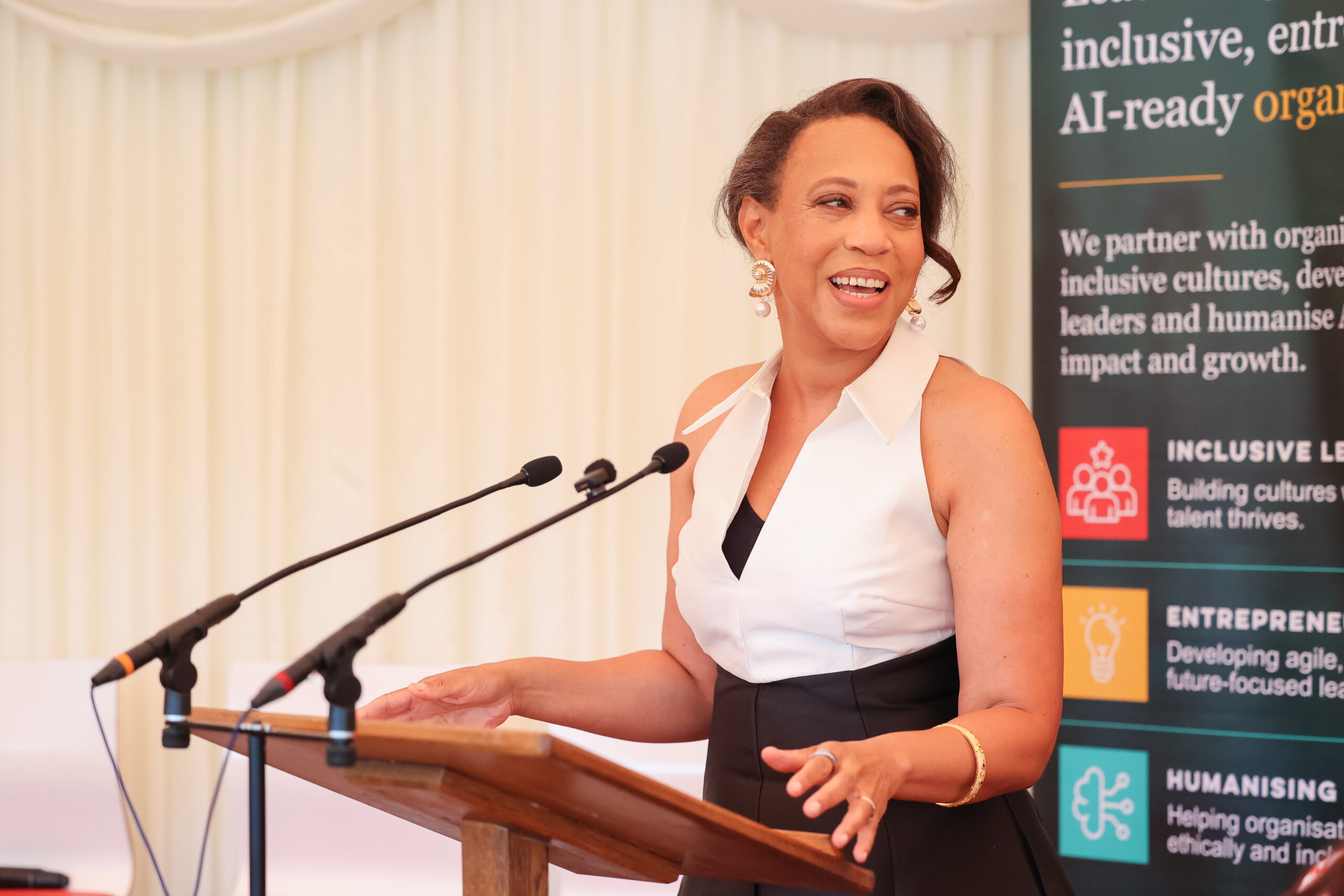
On 2 July 2026, 120 leaders gathered at the House of Lords to mark twenty years of Jenny Garrett Global. The event, Built on Impact, 20 Years Forward, was hosted by broadcaster Arti Halai and opened by Baroness Verma. It asked one question, in two halves: what kind of leaders have we built, and what kind of leaders do the next twenty years demand?
This is what the room said, and what we think it means.
What kind of leadership will the next twenty years demand?
Three things came through most clearly.
Entrepreneurial skills are no longer optional in a world being shaped by AI. Not entrepreneurial in the sense of starting a business. Entrepreneurial in the sense of leading one. Spotting the opportunity, taking the risk, backing your own judgement when the data runs out. As machines become more capable of processing, summarising and drafting, the value of the human call goes up, not down. The leaders who thrive will be the ones who can decide in conditions where the evidence is incomplete and the precedent does not exist.
Nobody can be left behind. The next twenty years will sort people into those the change works for and those it does not, unless leaders decide otherwise. That is a leadership choice, not a technology outcome. AI systems reproduce the conditions they are trained on. Left alone, they will scale existing inequity faster and more cheaply than any human institution ever managed. Inclusion is no longer a values statement. It is a design decision, made early, by someone with the authority to make it.
Create the conditions, not just the leaders. Talent rarely fails. The growing conditions fail. Most organisations respond to a leadership gap by looking for better people, or by sending the people they have on another programme. Far fewer examine the soil: who gets stretch work, whose mistakes are forgiven, which behaviours are quietly punished, who is in the room when decisions are made. If the leader you will need in five years is not emerging, the problem is usually the environment, not the individual.
What leadership models are we still using, and why do they fail?
The leadership models most working leaders were built on were models of consistency. Be visionary. Be decisive. Be authentic. Pick a lane and stay in it.
The notes that came back from the tables on 2 July did not read like that. They read like a set of tensions:
- Confidence does not mean competence.
- Leading without ego. And pioneering. And entrepreneurial spirit.
- Shape-shifting and constantly evolving, while retaining a compass.
- Not extrovert, not introvert, but ambivert.
- Not looking for approval. And really hearing people.
- Andbreaking down the concept of hierarchy.
None of that is a list of virtues. It is a description of leaders who can hold two opposing things at once without collapsing into either. Confident but not certain. Anchored but adaptive. Ambitious but without ego.
That is a harder ask than any adjective on a competency framework, and it is the honest answer to what the next twenty years require.
What role does AI play in the leadership of the future?
AI can process the data. It can summarise the meeting. It can write the first draft.
It cannot read the room, carry the consequences, or decide who gets a chance. Those remain human, and they are precisely the capabilities most organisations have spent twenty years failing to develop deliberately.
The paradox worth sitting with: the more capable the technology becomes, the more the differentiating skills of leadership become the ones that cannot be automated. Judgement. Courage. The willingness to be accountable for a decision that could go wrong. Organisations investing heavily in AI capability and lightly in human leadership capability are optimising the wrong half of the equation.
What does twenty years of leadership development actually teach you?
Two things.
Leaders grow leaders, and they do it faster than the technology changes. Every serious shift in an organisation can be traced back to someone who decided that someone else was worth backing.
And: the leaders we have built are already out there being the leaders we need. They are in the room, often at the edge of it. The work is not to invent a new kind of leader. It is to recognise the ones we have, and to fix the conditions that keep making them invisible.
About Jenny Garrett Global
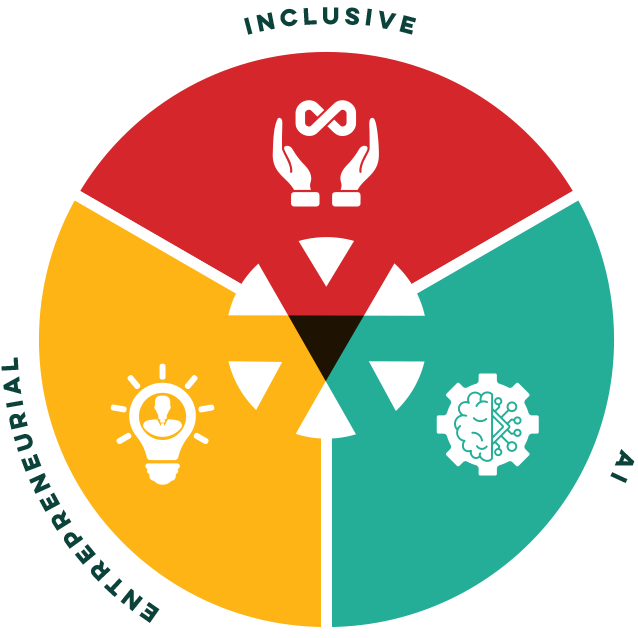
Jenny Garrett Global is a leadership development consultancy founded in 2006 by Jenny Garrett OBE, working across inclusive leadership, entrepreneurial leadership and AI-ready leadership. Jenny Garrett was awarded an OBE in 2021 for services to entrepreneurship and women in business, and is the author of Rocking Your Role and Equality vs Equity.
Jenny’s new book, AI for Equity, is published by Emerald on 27 October 2026 and is available for pre-order now.
Built on Impact, 20 Years Forward took place on 2 July 2026 in the Cholmondeley Room, House of Lords, hosted by Arti Halai and opened by Baroness Verma. Panel contributors included John Mark Williams (Institute of Leadership), Dr Helen Woolnough (Equans), Tabitha Morton (UN Women UK) and Izzy Obeng MBE (Foundervine), as well as closing words from Mehnaz Akhter (B & Q) and Ruth Odih (Centrica)