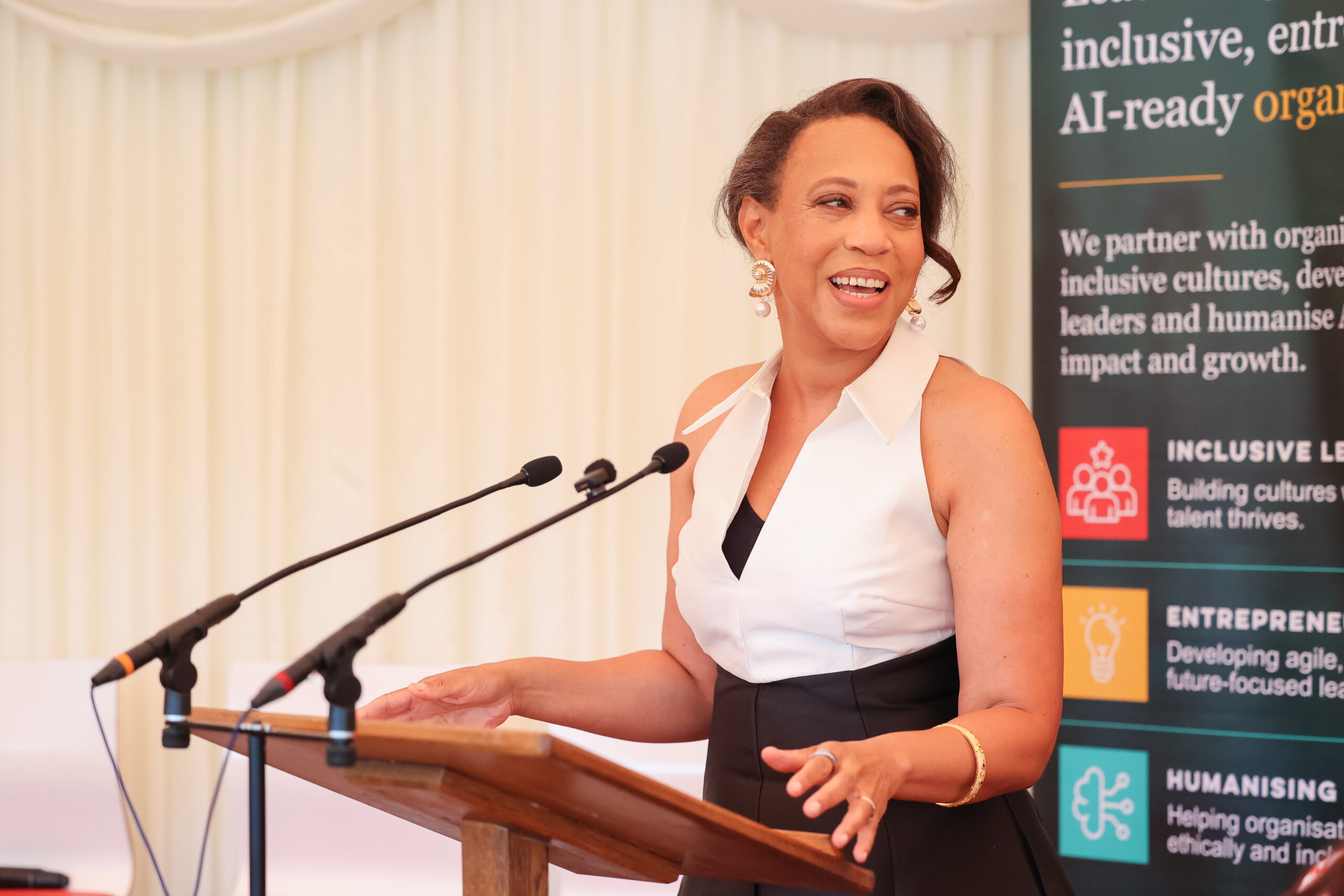

Last week, I stood before 25,000 entrepreneurs in Coimbatore, Tamil Nadu (southern India), and witnessed something I hadn’t expected: confidence without competition.
Not the performative kind that requires putting others down to lift yourself up. Real confidence. The kind that says, “We’re thriving, and there’s room for you to thrive too.”
It’s rare. And it’s exactly what empowered leadership looks like.
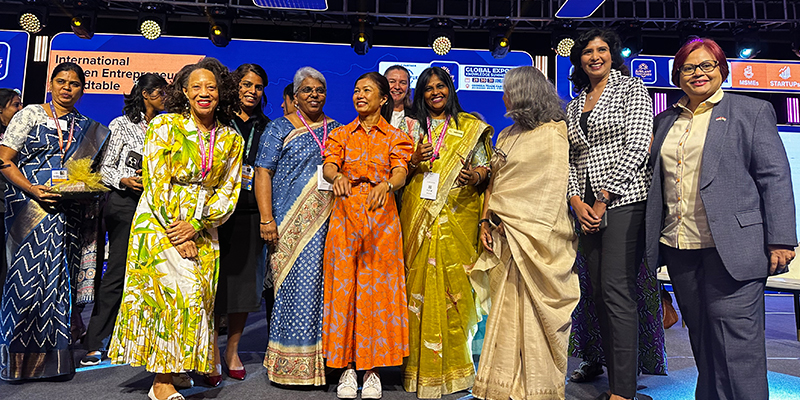
I’d gone to Tamil Nadu for Jubilant Tamil Nadu 2026 to deliver a keynote on empowered leadership and participate in a panel discussion on barriers facing women entrepreneurs. What I got wasn’t just a conference. It was a masterclass in what happens when leaders, particularly women, step fully into their power without diminishing anyone else in the process.
When the Family Business Becomes Yours
On the panel, another panellist asked the question that changed the room: “What’s the biggest barrier you’ve faced as a woman entrepreneur?”
The room went quiet. Then one woman spoke up.
“My father built this business over 40 years. When he handed it to me, everyone expected me to run it exactly as he did. But I’m not him. I had to find the courage to lead my way-not his way, not the way his competitors expected, but my way. That meant disappointing some people. It meant proving myself over and over. And it meant believing I deserved to be there when everyone around me was waiting for me to fail.”
She wasn’t alone. Across the panel, women shared stories of inheriting family businesses traditionally led by men, stepping into roles they weren’t groomed for, having to claim their authority in spaces that weren’t designed for them.
This is women in family business succession at its rawest: not just learning the operations, but fighting for the right to lead differently. To bring your own vision. To make decisions your predecessors wouldn’t have made-and to stand firm when people push back.
The barriers aren’t just external. Self-belief is the foundation. You can have all the skills, all the qualifications, all the right answers-but if you don’t believe you belong in that room, someone else’s doubt will knock you sideways.
Mentoring matters. Not the generic kind-the specific, door-opening kind. The mentor who introduces you to the person who changes everything. The sponsor who puts your name forward when you’re not in the room. The advisor who tells you the truth when everyone else is being polite.
And persistence? Non-negotiable. The barriers don’t disappear after the first win. They just shift shape.
Tamil Nadu: Where Women-Led Enterprise Isn’t an Exception
Here’s what struck me most about Tamil Nadu: women entrepreneurs aren’t anomalies. They’re everywhere.
And the numbers back it up. According to India’s Sixth Economic Census, Tamil Nadu leads India with 514,273 women-owned informal micro-enterprises, employing over 720,000 people. The state accounts for 42% of all women factory workers nationally-that’s nearly half of India’s female manufacturing workforce concentrated in one region.
Look, this isn’t happening by accident.
Tamil Nadu has built an ecosystem where women-led enterprise is supported structurally, not just celebrated rhetorically. The World Bank’s Tamil Nadu Rural Transformation Project has facilitated loans worth ₹267 crores (approximately $32 million) for 8,400 women-led enterprises since 2022. Over 100,000 enterprises created. Nearly 53,000 jobs.
But beyond the programmes and policies, something cultural is happening here. Women aren’t just participating in the economy-they’re leading it.
And here’s the bit that made me stop: Tamil Nadu contributes 35% of India’s auto component production. Every car on the road globally-whether you’re driving in London, Lagos, or Los Angeles-has at least one part made here. Chennai, the state capital, produces 1.4 million cars annually. Three cars every minute.
This isn’t a developing economy trying to catch up. This is a global manufacturing powerhouse operating at scale-with women deeply embedded in its success.
What Empowered Leadership Actually Looks Like
After delivering the keynote and sitting on that panel, what became crystal clear is this: empowered leadership isn’t about titles, credentials, or even experience. It’s about conviction.
It’s that absolute certainty in your purpose that makes you willing to leap when everyone else is closing doors and staying safe. It’s not reckless. It’s not blind optimism. It’s self-belief so strong that it creates its own safety net.
That’s what I saw in Coimbatore. Entrepreneurs who’ve made the leap. Who’ve stepped into leadership roles that weren’t designed for them, launched businesses that people said would fail, persisted when the safer option would have been to quit.
Empowered leadership isn’t about waiting for permission. It’s about being so convinced of your why that nothing will stop you from taking that jump.

The Principles That Hold You When You Leap
Twenty years of doing this work-developing diverse talent, building inclusive leaders-I’ve seen three principles consistently separate empowered leaders from those who merely hold titles:
1. Lead with WHY, not WHAT
The organisations that weather change aren’t the ones with the best strategy decks. They’re the ones with the clearest purpose.
When market conditions shift, when budgets get cut, when AI disrupts your industry-leaders who’ve built everything on what they do find themselves scrambling. Leaders who’ve built on why they do it have an anchor.
Your competitors can copy your products, your services, your processes. They can’t copy your conviction.
When you’re clear on your why, you stop competing with everyone else. You start competing with the version of yourself from yesterday.
2. Build psychological safety
Empowered leaders don’t lead alone. They create environments where people can bring their whole selves, challenge assumptions, ask difficult questions, and admit when they don’t know something.
In the organisations I work with using our Tri-Level™ methodology-simultaneously developing diverse talent, line managers, and senior sponsors-we see 35%+ promotion rates and 98% recommendation scores. Not because we’re teaching people to be more confident. Because we’re creating systems where their confidence has room to grow.
Psychological safety isn’t soft. It’s strategic. It’s the difference between a team that tells you what you want to hear and a team that tells you what you need to know.
3. Role model courage
The most powerful leadership development happens when people see courage in action, not in theory.
Empowered leaders don’t ask their teams to take risks they won’t take themselves. They don’t ask for vulnerability they won’t model. They don’t demand change they won’t embody.
This isn’t about grand gestures. It’s about consistently choosing the harder conversation, the uncomfortable truth, the decision that serves the mission over ego.
Your team is watching how you lead when things get difficult. That teaches them more than any workshop ever will.
Confidence Without Othering: The Leadership Lesson We’re Missing
Here’s what I didn’t expect from Tamil Nadu: the pride.
Not the chest-beating, nationalistic kind. Not the “we’re number one and everyone else is rubbish” kind.
Just… pride. In what they’ve built. In their innovation. In their industrial strength. In the fact that their automotive corridor is one of the top ten in the world.
And they celebrated it without diminishing anyone else.
I’ve spent enough time in corporate environments to know how rare that is. How often leaders build themselves up by tearing competitors down. How often success gets framed as a zero-sum game: if you’re winning, someone else must be losing.
But in Coimbatore, I watched a state buzzing with innovation, thriving economically, leading globally in manufacturing-and doing it without othering neighbouring regions or countries.
That’s the leadership lesson too many of us are missing.
You can be excellent without making everyone else feel inadequate. You can be confident without being arrogant. You can celebrate your wins without diminishing someone else’s journey.
Real confidence doesn’t need to diminish others. It’s the counterfeit kind that does.
Yes, I’m still reeling from the traffic. The way cars are driven in India is something I might never quite adjust to. But watching how Tamil Nadu navigates those complex systems with such confidence taught me something: adaptability isn’t just a business skill. It’s a cultural strength. And courage isn’t the absence of fear-it’s the willingness to move forward anyway.
What Leadership Development for Women Actually Requires
I left India thinking about the women I work with through our programmes-the high-potential talent at NHS trusts, the rising leaders at National Gas, the council executives navigating constant organisational change.
What would it look like if we stopped treating leadership development for women as a nice-to-have and started building ecosystems that expect and support women’s leadership the way Tamil Nadu does?
It would mean challenging the default. Stop asking women to adapt to leadership models designed by men, for men. Start asking what leadership looks like when it’s designed with women, not just for them.
It would mean opening doors, not just offering advice. Mentoring matters, but sponsorship changes lives. Who’s putting women’s names forward for opportunities? Who’s making introductions that shift trajectories?
It would mean building support structures, not just individual confidence. Self-belief is essential. But self-belief without systemic support is exhausting. We need organisations willing to change cultures, not just individuals willing to work harder.
And it would mean celebrating success without competition. What if we stopped pitting women against each other for limited seats at the table and started building bigger tables?
Look, the barriers are real. Self-doubt. Lack of access. Gender bias. Cultural expectations. The weight of being the “first” or the “only.”
But the barriers aren’t insurmountable. Tamil Nadu proves it. The women I work with every day prove it.
Frequently Asked Questions About Empowered Leadership
What is empowered leadership?
Empowered leadership is the absolute conviction in your purpose that makes you willing to take risks when others are playing it safe. It’s not about being fearless-it’s about being so committed to your why that fear doesn’t get the final say. Empowered leaders create psychological safety, role model courage, and lead with their values rather than following what competitors are doing.
What are the main barriers women entrepreneurs face when taking over family businesses?
Women inheriting family businesses face three critical barriers: self-belief (convincing yourself you deserve to be there when everyone’s waiting for you to fail), external expectations (pressure to run the business exactly as male predecessors did rather than bringing your own vision), and proving credibility (having to demonstrate competence repeatedly in ways male successors rarely experience). The biggest challenge isn’t learning the operations-it’s claiming your right to lead differently.
How can women develop leadership confidence without formal mentoring programmes?
Leadership confidence grows through three practical strategies: Find specific sponsors, not just mentors-people who put your name forward when you’re not in the room and make door-opening introductions. Eliminate one piece of negative self-talk at a time-identify the story you tell yourself that holds you back and actively replace it with truth. Build a network of cheerleaders-empowered leaders don’t lead alone; they create systems of support that reinforce their conviction when doubt creeps in.
Why is Tamil Nadu considered a hub for women-led businesses?
Tamil Nadu leads India with over 514,000 women-owned micro-enterprises and accounts for 42% of the country’s women factory workers. The state has built structural support systems-including the Tamil Nadu Rural Transformation Project that’s facilitated ₹267 crores in loans for women-led enterprises-rather than just celebrating women entrepreneurs rhetorically. The region’s cultural ecosystem expects and supports women’s leadership at scale, creating an environment where women-led enterprise is the norm, not the exception.
What’s the difference between mentoring and sponsorship for women leaders?
Mentoring provides advice and guidance-someone who helps you think through challenges. Sponsorship changes trajectories-someone who actively advocates for you, introduces you to decision-makers, and puts your name forward for opportunities you didn’t know existed. Both matter, but sponsorship is what actually opens doors. The best sponsors tell you the truth when everyone else is being polite and use their social capital to create access you couldn’t achieve alone.
How do you lead with confidence without diminishing others?
Real confidence doesn’t require making others feel inadequate. It’s about being clear on your own value and celebrating your wins without tearing down someone else’s journey. Empowered leaders understand that success isn’t a zero-sum game-your excellence doesn’t require someone else’s failure. This approach builds psychological safety, creates bigger tables rather than fighting for limited seats, and models the kind of leadership that elevates everyone rather than just yourself.
A Manifesto for Empowered Leadership
We don’t need more leaders who know how to climb.
We need leaders who know how to build ladders.
We don’t need leaders who succeed by making others smaller.
We need leaders whose success creates space for others to grow.
We need leaders who are so clear on their why that they don’t sway when the wind changes direction.
Who build psychological safety so fierce that people bring their full selves, not just their corporate masks.
Who role model courage-not the loud, performative kind, but the quiet, persistent kind that leads by example.
We need leaders who understand that confidence without competition isn’t weakness. It’s wisdom.
Who know that celebrating your own success doesn’t require tearing down someone else’s.
Who understand that making it your own-whether it’s a family business, a corporate role, or a startup you’re building from scratch-doesn’t mean doing it alone.
We need leaders who believe they can fly. And when they jump, they land safely-not because the ground is soft, but because their conviction holds them.
Look, empowered leadership isn’t about being fearless. It’s about being so committed to your purpose that fear doesn’t get the final say.
It’s about stepping into rooms that weren’t designed for you and making them yours.
Taking over businesses built by someone else and leading your way.
Persistence when doors close. Self-belief when voices doubt. Mentors who open doors and sponsors who pull you through.
This is what I learned from 25,000 entrepreneurs in Coimbatore. From women inheriting family businesses and making them their own. From a state that contributes 35% of the world’s automotive components and celebrates it without diminishing anyone else.
The courage to lead your way doesn’t come from permission.
It comes from conviction.
And the world needs more leaders willing to jump.
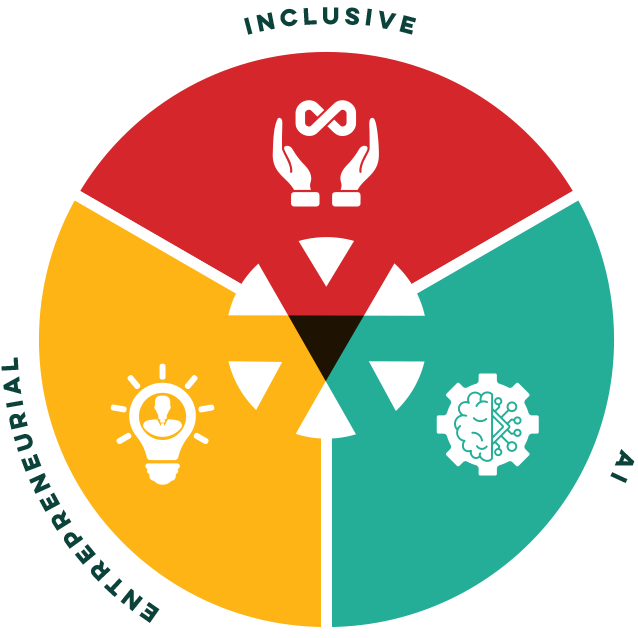
Jenny Garrett OBE is CEO and Founder of Jenny Garrett Global, a boutique leadership development consultancy specialising in Inclusive Leadership, Entrepreneurial Leadership, and AI-Ready Leadership. Her Tri-Level™ methodology has achieved 35%+ promotion rates for diverse talent across major UK organisations. She co-hosts the “AI for Equity” podcast and is currently writing “AI for Equity: Creating a More Equitable Society for All” (Emerald Publishing, September 2026).
Ready to Develop Empowered Leaders in Your Organisation?
If you’re looking to build leadership capability that goes beyond traditional development programmes-creating systems where diverse talent doesn’t just survive but thrives-let’s talk.
Get in touch to explore how our Tri-Level™ methodology could work for your organisation
Listen to the AI for Equity podcast: Exploring how AI can advance equity rather than deepen inequalities, co-hosted with my daughter Leah-Sunshine Garrett. Subscribe here.