
When “culture” replaces “EDI” in a Financial Services organisation, the question worth asking is this: has the thinking changed, or just the language?
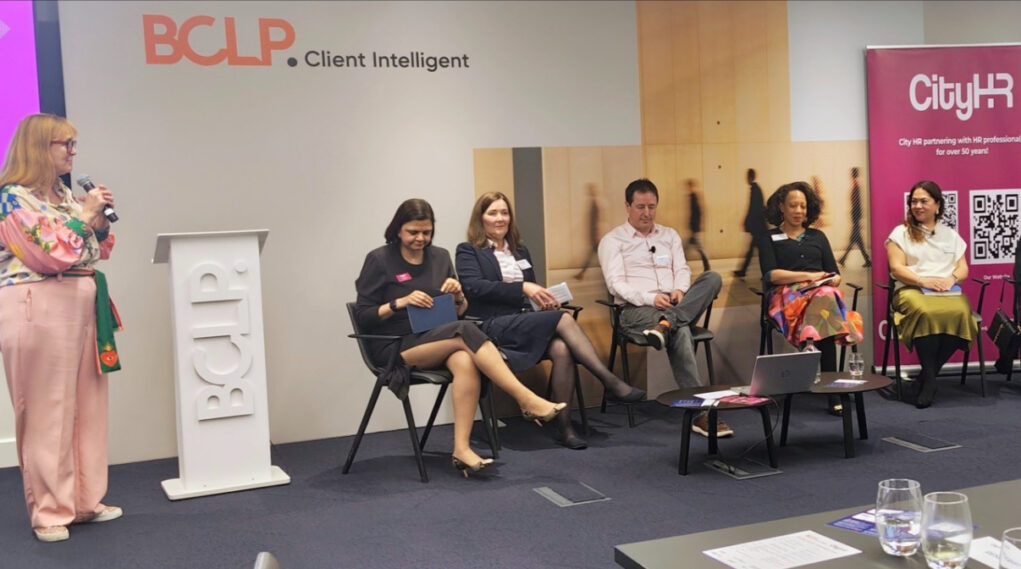
I was honoured to be invited by City HR Association – of whom Jenny Garrett Global is a trusted supplier – to explore exactly this question with a room of senior HR professionals in Financial Services recently. The debate was sharp, the room was engaged, and I left with one thought I have not been able to put down since.
The sector is at an inflection point. And not just because of the culture conversation.
The Regulatory Landscape Has Shifted – and Not in the Way You Might Think
For several years, Financial Services HR leaders could point to incoming FCA and PRA diversity and inclusion rules as a reason to act. Mandatory D&I strategies. Reporting requirements. Targets. The regulatory backstop was coming.
Then, earlier this year, it did not. Both the FCA and PRA stepped back from their proposed mandatory D&I reforms, citing legislative developments elsewhere and a desire to avoid additional burdens on firms. The formal regulatory pressure that many organisations had been quietly building their case around was removed.
Here is what that actually means: the impetus to act on inclusion now has to come from culture, not compliance. You cannot wait for a regulator to tell you what good looks like. You have to decide for yourself.
At the same time, the Employment Rights Act 2025 is quietly doing something significant. It has priced the cost of a poor culture more accurately than any previous legislation. Employers are now required to take all reasonable steps to prevent harassment – not just reasonable ones. Tribunal claim windows have been extended. Unfair dismissal compensation caps have been removed. The legal baseline has risen, and the financial exposure for organisations that get culture wrong has risen with it.
The regulatory picture in 2026 is not “less pressure on inclusion.” It is different pressure – and in some ways, harder to navigate.
Why Retreating into “Culture” Language Is a Risk, Not a Solution
Against this backdrop, some FS organisations are making a move that feels safer but may not be. They are replacing “EDI” with “culture” – broadening the language, softening the specificity, and hoping the discomfort that comes with talking about race, gender, disability, and background fades into a more palatable conversation about values and behaviours.
I understand the logic. I disagree with the conclusion.
In my work with Financial Services organisations over twenty years – including Lloyds Banking Group, the FCA, and Nationwide, alongside others across banking, insurance, and professional services – I see a consistent pattern when a societal moment arrives. A news story, a public event, a moment that puts difference centre stage. And in the weeks that follow, three types of organisation emerge.
The first dismisses it. “That is not really relevant to us.” The second reaches for a policy. “We have an EDI statement – that covers it.” The third does something different. Leadership communicates personally, directly, and specifically to the people most likely to have been affected. Not a blanket email. A genuine acknowledgement that some of their people are navigating something hard.
Same sector. Same week. Three completely different cultures.
The difference is not resources or policy. It is whether the organisation has trained itself to see the individual – and respond to what they actually need.
When we retreat into broad “culture” language because specificity feels uncomfortable, we do not remove the problem. We just make it harder to name, harder to measure, and harder to defend when it surfaces in a tribunal.
The Equity Lens Is Not the Problem – It Is the Solution
Here is what twenty years of working inside organisations on inclusion has taught me: done well, with a genuine equity lens, focusing on the individual is not divisive. It is the foundation of every inclusion effort that has ever actually worked.
The electric toothbrush was designed for people with limited mobility. The wheelie suitcase for people who struggle with weight. Both transformed how everyone lives – because a designer paid close attention to a specific person’s specific experience and built something better as a result.
That is what equity looks like in practice. Not ignoring difference. Designing for it. And in doing so, improving things for everyone.
In Financial Services, where groupthink has been identified by regulators themselves as a governance risk, the argument for cognitive and experiential diversity is not just moral. It is commercial. Homogenous leadership teams make worse decisions. The evidence for this is not contested.
Retreating from individual-focused inclusion work in the name of “culture” does not reduce that risk. It increases it – quietly, without fanfare, until it becomes visible in the data you are already required to report.
Every Organisation Is in a Season – Do You Know Which One You Are In?
One of the frameworks I use with leadership teams in Financial Services is deceptively simple. It asks: what season is your organisation in right now?
Spring brings new energy, fresh thinking, optimism. You are recruiting, building, full of possibility.
Summer is when things are working. Culture is strong, people feel it, and the investment is paying off.
Autumn is a period of transition. Things are being shed – people, structures, ways of working. Not failure. Necessary change.
Winter is stark. Harder. The aftermath of disruption. But also – the quiet before renewal.
Most organisations believe they are in Summer. In my experience, a significant number of Financial Services organisations are currently in Autumn – navigating post-pandemic restructuring, technology transformation, and a workforce whose expectations have fundamentally shifted – and have not yet named that honestly.
This matters enormously for culture work. A values programme launched in Autumn without acknowledging the change people are navigating will feel tone-deaf. A belonging initiative in Winter, without addressing the anxiety underneath it, will not land.
And right now, AI is accelerating the seasons. Transformations that once took a decade are happening in two years. Across Financial Services – in trading, compliance, back-office operations, client services – automation is reshaping what work looks like. People are asking a question they are not always comfortable saying aloud: am I still valuable here? If you are thinking about what this means for leadership development, our piece on developing an AI mindset for HR leaders explores this directly.
That question sits right at the heart of belonging. If your culture is not strong enough to hold that anxiety openly, it goes underground. And underground anxiety in a regulated firm is not just a people problem. It is a conduct risk. We explore why AI adoption fails when culture is not addressed in more detail here.
AI is not separate from your culture conversation. For Financial Services, it may be the most urgent part of it. Read more on why empowered leadership matters more than ever in an AI world.
The Question That Matters Most
After twenty years of working with organisations on inclusion, leadership, and culture, I keep returning to one distinction that cuts through the noise.
There is a difference between people who genuinely belong in an organisation – and people who have simply learned to fit in.
Belonging means you can bring your full self, your real perspective, your honest voice. You do not have to manage how you are perceived before you speak.
Fitting in means you have learned the code. You know what is rewarded and what is not. You perform the culture rather than experiencing it.
Financial Services has historically produced some of the most sophisticated “fitting in” cultures in any sector. Strong graduate pipelines, clear progression frameworks, powerful social norms. The culture is cohesive. But cohesion around a narrow set of norms is not belonging. It is conformity. And conformity, as every risk manager in the room knows, is where groupthink lives.
That is not a culture problem. That is an equity problem wearing a culture mask.
What This Means for HR Leaders in Financial Services
If you are navigating this question right now, here is where I would start:
Know your season. Be honest about where your organisation actually is, not where you wish it were. The intervention you need in Autumn is completely different to the one you need in Summer.
Do not let the FCA retreat become your retreat. The regulators stepped back from mandatory rules. That is not permission to step back from the work. If anything, it is an invitation to lead rather than comply.
Separate the language question from the thinking question. Call it culture, call it EDI, call it belonging – the label matters less than whether the underlying approach has an equity lens that sees individuals, not just cohorts.
Put belonging on your AI transformation agenda. If your firm is going through significant technological change – and in Financial Services, every firm is – culture and belonging are not soft add-ons. They are the infrastructure that determines whether the transformation succeeds or creates a conduct risk you did not see coming.
Take the ERA seriously as a culture signal, not just a compliance exercise. The new harassment duties, extended tribunal windows, and removal of compensation caps tell you something about where the law thinks culture should be.
The question is whether your organisation knows the difference between people who genuinely belong – and people who have learned to perform belonging.
Because one of those cultures will thrive through the changes coming to Financial Services. The other will not.
Frequently Asked Questions
Is culture the same as EDI in a Financial Services context?
Not exactly. EDI focuses on specific groups, individual experiences, and measurable outcomes around fairness and representation. In Financial Services, where the FCA has identified groupthink as a governance risk, the two are more closely linked than many firms acknowledge. Retreating from EDI specificity in the name of culture risks losing the precision that makes inclusion work effective.
What happened to the FCA’s diversity and inclusion rules?
Both the FCA and PRA stepped back from their proposed mandatory D&I reforms in early 2025, citing legislative developments and a desire to avoid additional burdens on firms. This means FS organisations can no longer rely on incoming regulation as the primary driver for inclusion work. The impetus now has to come from culture and leadership – not compliance.
How does the Employment Rights Act 2025 affect culture in Financial Services?
The ERA 2025 raises the legal baseline for workplace culture significantly. Employers are now required to take all reasonable steps to prevent harassment. Tribunal claim windows have been extended to six months. Unfair dismissal compensation caps have been removed. Together, these changes price the cost of a poor culture more accurately than previous legislation.
What is the Seasons of Culture framework?
The Seasons of Culture is a framework developed by Jenny Garrett OBE to help leaders understand where their organisation is in its culture journey. Spring, Summer, Autumn, and Winter represent different organisational states. Many Financial Services organisations are currently in Autumn – navigating structural transformation – without having named that honestly. Knowing your season is the starting point for effective culture work.
What is the difference between belonging and fitting in in Financial Services?
Belonging means an individual can bring their full self, real perspective, and honest voice to work. Fitting in means they have learned the code and perform the culture rather than experiencing it. Financial Services has historically produced sophisticated fitting-in cultures. The distinction matters because conformity is where groupthink lives – and in a regulated environment, diverse perspectives are a governance asset.
How does AI affect belonging and culture in Financial Services firms?
AI is accelerating organisational change in Financial Services faster than almost any other sector. This creates a question employees are not always comfortable asking aloud: am I still valuable here? If your culture cannot hold that anxiety openly, it goes underground – and underground anxiety in a regulated firm is a conduct risk.
How can HR leaders in Financial Services take action?
Know your season honestly. Do not let the FCA’s regulatory retreat become your organisational retreat. Put belonging on your AI agenda. Use the Employment Rights Act 2025 as a cultural signal, not just a compliance exercise. Jenny Garrett Global’s inclusive leadership programmes can help your organisation navigate this moment.