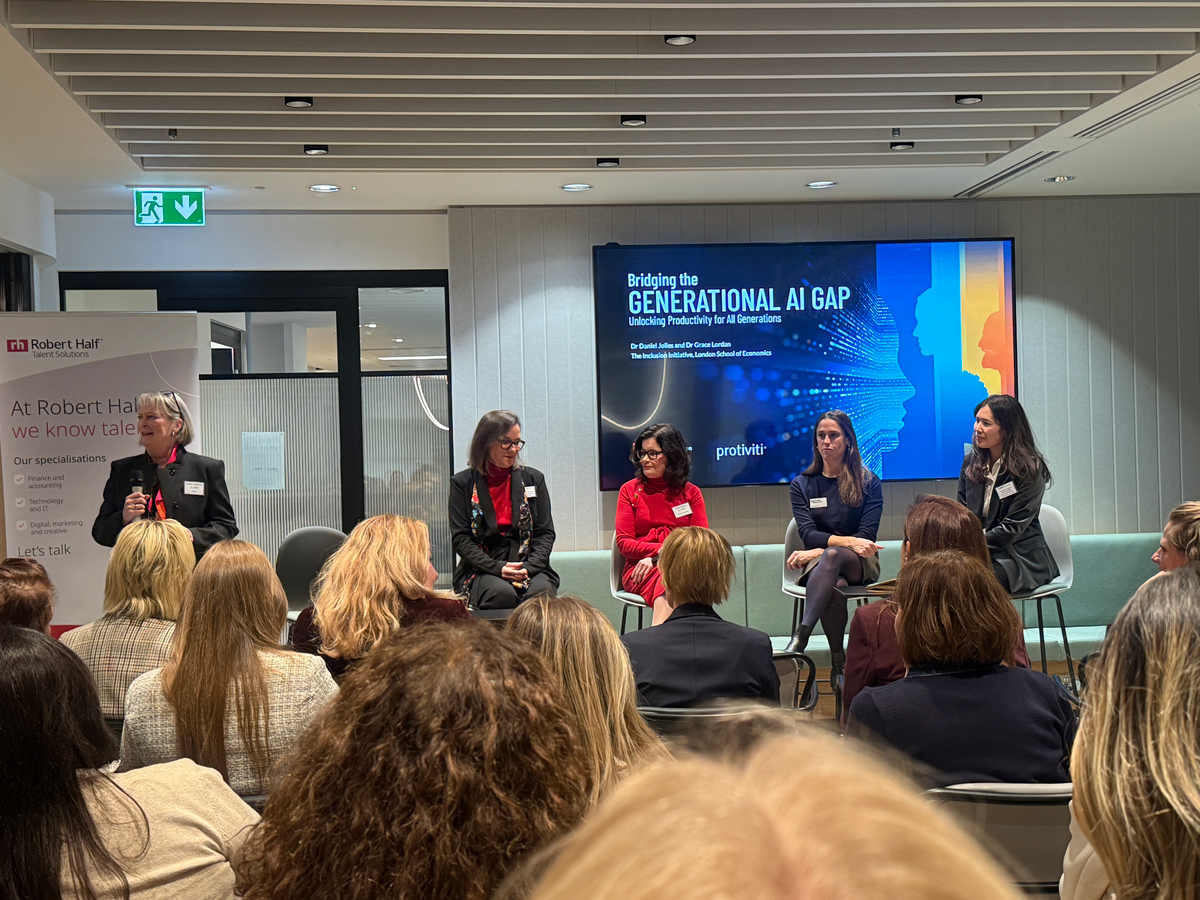

Artificial intelligence (AI) is no longer a futuristic concept reserved for a handful of data scientists; it is being woven into the fabric of how we hire, bank, learn, and receive healthcare. The tools are transformative — and they can also quickly deepen inequities when left unchecked. AI will either magnify the biases of the few or amplify the possibilities of the many. Which future we choose depends on the questions we ask and the conversations we are willing to have. Right now.
Mind the Data Gap
Algorithms learn from yesterday’s records. When those records reflect old inequalities – who got the loan, who was promoted – the software quietly repeats the pattern. We saw this in 2020, when the Home Office scrapped its visa-sorting tool after campaigners showed it fast-tracked “white” passports while red-flagging applicants from formerly colonised nations. Lesson learned: if we don’t pause to ask, “Who’s missing from this data?”, exclusion happens at machine speed.
From Hidden Code to Human Consequences
Every line of code carries the fingerprints of its creators – their worldviews, assumptions, shortcuts, blind spots and best guesses. When a model is trained on biased data, we get decisions that sideline single parents, recruitment tools that overlook disabled candidates, triage systems that mis-prioritise patients with darker skin tones, perpetuating the marginalisation of anyone who was not at the centre of yesterday’s status quo. The point isn’t to vilify technology but to bring intentionality to its development.
Ethical AI starts with diverse voices at the table from data scientists, social scientists, and the communities most affected by algorithmic decisions. Diversity surfaces questions that a homogenous team may never think to ask, such as, “What does success look like for a neurodivergent learner?” or “How might facial analysis misread darker skin tones?
The Risk Few People Talk About: Fairness Debt
Tech teams worry a lot about technical debt – the bugs you store up by cutting corners today and the (system) architectural mess those shortcuts make. What almost no one talks about is fairness debt: the social harm that builds when we launch a “good-enough” model and leave it un-checked. Imagine a recruitment tool that favours graduates from a handful of elite universities. It seems fine in year one, but five years on the company wonders why its talent all looks and thinks the same. Fairness debt isn’t just a PR risk; it robs organisations of fresh ideas and future customers. Paying it down means scheduling regular equity reviews, updating the AI model’s training data as society changes, and giving the people affected a real say, including a veto option.
Regulation in Plain English
The UK’s “pro-innovation” approach boils down to five watchwords: safety, openness, fairness, accountability and the right to challenge (DSIT, 2024). Two quick actions you can take:
- Ask for the plain-language record. From May 2025, central-government bodies must publish a short, public note explaining any algorithm that influences public decisions (Government Digital Service, 2025). If vendors or partners can’t share something similar, that’s a red flag.
- Use the “Responsible Buying” checklist. The Local Government Association’s guide prompts buyers to ask simple questions like Who tested this for bias? How often will you check again? Before any contract is signed!
Simple Steps UK Leaders Can Take
- Put one question on every AI agenda: Who benefits and who bears the risk?
- Tie bonuses to inclusion goals: What gets measured — and rewarded — gets resourced.
- Budget for fairness-debt repayments: Set aside time and money for annual equity audits.
- Train everyone, board to frontline, to challenge an AI model or algorithm used, in plain language: Knowledge and understanding to feel confident to ask the right questions.
- Keep a “stop button”: If evidence of harm appears, pause the system first, defend it later.
Democratising AI is not about diluting innovation; it is about directing innovation toward shared prosperity and progress. Let’s keep asking the questions that unlock equitable AI. Who might we be leaving out, and what will we do about it?Ask it early, ask it often and AI becomes a tool that serves the needs and futures of everyone, not just the usual benefactors of technological advancement.
References
BBC News. (2020, August 4). Home Office drops “racist” algorithm from visa decisions. (BBC)
Department for Science, Innovation & Technology. (2024). Artificial Intelligence sector study 2023. (GOV.UK)
Department for Science, Innovation & Technology. (2024, February 6). A pro-innovation approach to AI regulation: Government response. (NHS England Digital)
Government Digital Service. (2025, May 8). Algorithmic Transparency Recording Standard: Guidance for public sector bodies. (GOV.UK)
Local Government Association. (2023, December 18). Responsible buying: How to build equality & data protection into your AI commissioning. (Local.gov.uk)
Santos, R. de S., Fronchetti, F., Freire, S., & Spinola, R. (2024). Software fairness debt: Building a research agenda for addressing bias in AI systems [Conference paper]. (arxiv.org)
Sohini Petrie

Sohini is an experienced and accredited leadership and team coach with a grounding in positive psychology and places wellbeing at the core of her practice. Her coaching is trauma-informed and she is anti-oppressive trained to offer the kind of support that senior leaders and senior leadership teams need, to thrive and perform in fast-paced, high-pressured, complex, multi-cultural, multi-generational contexts.