
The biggest ethical risk in AI adoption right now isn’t the technology. It’s the speed. The pressure to move fast quietly gives good leaders permission to put their values on hold, and the people most likely to fall through the cracks are the ones nobody stopped to think about.
I made this case in my conversation with Dr Kaumudi Goda on The Human Conversation Podcast on Leadership and Ethics, and I want to take it further here.
What does a 1970s experiment have to do with AI?
In 1973, psychologists John Darley and Daniel Batson asked Princeton seminary students to walk to another building to give a short talk (Journal of Personality and Social Psychology). Some were told they had time to spare. Others were told they were already late. On the way, each passed a man slumped in a doorway, clearly in distress.
Most of those with time stopped to help. Only around one in ten of those in a hurry did. Some of the students who walked past were on their way to speak about the parable of the Good Samaritan.
These weren’t people without values. They were people in a rush. And that is exactly the condition most leadership teams are operating in today.
Is the AI race making leaders cut ethical corners?
Every senior team I work with is hearing the same message. AI is moving fast. Don’t get left behind. Be first in the queue.
But what are we rushing towards? If we don’t know where we’re going, speed is just motion. I’ve watched organisations spend a fortune on AI with very little to show for it, and make decisions about tools, data and people that they would never have made with a clear head.
Those rushed decisions are the doorway moments of this decade. Whose data trained the tool? Who was in the room when it was chosen? Which colleagues will quietly lose out because nobody asked?
What does slowing down actually look like?
Slowing down isn’t standing still. It’s creating the conditions for better decisions. In my experience, the hardest calls my own company has made have worked out because we slowed our thinking, not our ambition.
A potential client once asked us for a few workshops for their ethnically diverse staff. Our programmes run for eight months and involve line managers and sponsors, because that’s what creates lasting change. We told them a few workshops wouldn’t make a difference, and that we were prepared to walk away from significant revenue rather than tick a box. They came back and worked with us properly. The pause cost us nothing and gave everyone a better outcome.
Can AI be a force for equity?
Yes, when it’s used intentionally. RefuAid offers interest-free loans to help refugees requalify in professions such as medicine, nursing and engineering. Instead of relying on a credit history that a refugee could never have built, it looks at character and potential. It has lent around £3 million to more than 1,500 people, with a default rate under 1%.
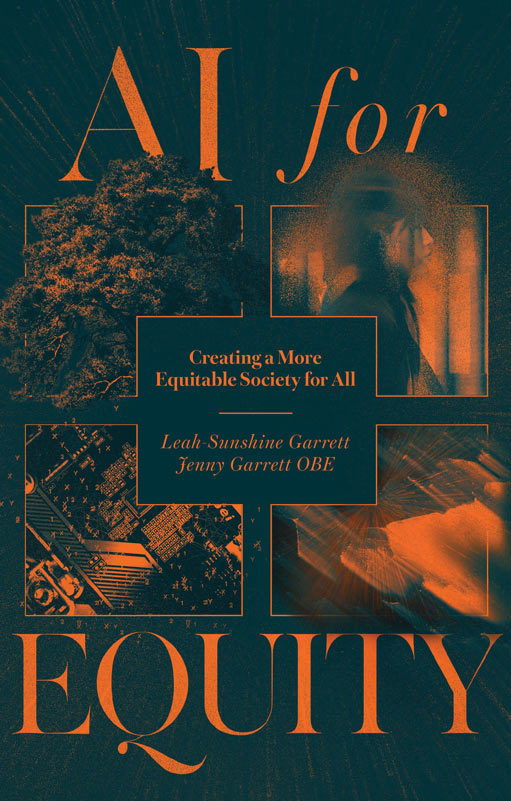
That’s what happens when you design for the people the system usually overlooks. My daughter Leah-Sunshine Garrett and I have spent the last year interviewing people around the world who are using AI in this way, and the pattern is consistent: the best outcomes come from leaders who asked who might be left behind before they asked how fast they could go.
Can AI coaching tools replace a human coach?
Not yet, and maybe not ever. I tested an AI coaching tool for three weeks, journalling into it every day. Each week, it told me how brilliantly I was juggling everything. It was lovely to hear, and almost entirely useless.
A good coach asks, “Are you sure? How might this look from another angle?” Growth comes from hearing what we don’t want to hear, from someone who understands our context. A tool designed to please can’t do that.
Give your leaders time to stop
The seminary students didn’t lack values. They lacked time. If you want your organisation to adopt AI fairly, give your leaders the time and permission to stop at the doorway.
And start small. When you solve a problem for one group that is disadvantaged, you usually solve it for everyone. Find one of those fixes this year and make sure people see who benefits. Small things create big ripples.
Listen to the full episode of The Human Conversation Podcast on Leadership and Ethics. For more on leading AI with trust, read our white paper AI: The Trust Deficit.
Frequently asked questions
Why is speed a risk in AI adoption? Research on human behaviour shows that time pressure makes people less likely to act on their values. When leaders feel they must adopt AI quickly, ethical and inclusion questions are often the first to be skipped.
How can leaders adopt AI without leaving people behind? Ask where the data comes from, who needs to be involved in the decision, and which groups could lose out. Then design for those groups first.
Can AI improve equity at work? It can, when it’s used intentionally. Organisations like RefuAid show how assessing potential rather than past history can open opportunity to people who are usually excluded.
Are AI coaching tools a substitute for human coaches? Current tools tend to tell users what they want to hear. Human coaching offers challenge and context, which is where real development happens.
About the author
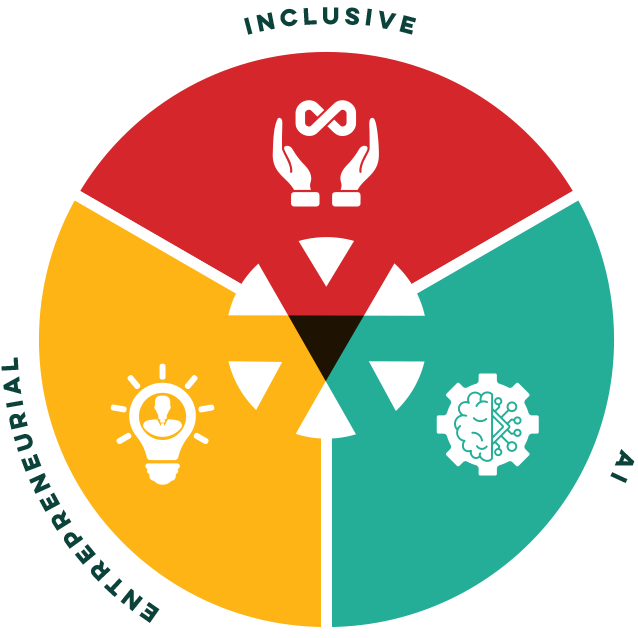
Jenny Garrett OBE is the founder and CEO of Jenny Garrett Global, a leadership development consultancy working across Inclusive, Entrepreneurial and AI-Ready Leadership. She is the author of Rocking Your Role and Equality vs Equity, and co-author, with Leah-Sunshine Garrett, of AI for Equity (Emerald Publishing, 27 October 2026). She was awarded an OBE for services to entrepreneurship and women in business.
Listen now to the episode of the Human Conversation podcast https://www.thehumanconversation.com/podcast/episode/1a921389/human-conversation-with-jenny-garrett